Back patios
A patio is where stamped concrete pays off most, because you sit on it and look at it every day. Stone and tile patterns read well here and can tie the slab to the house.
Plain gray slab cracking or wearing out? We pour stamped concrete with the color, pattern and base matched to how you'll use it.
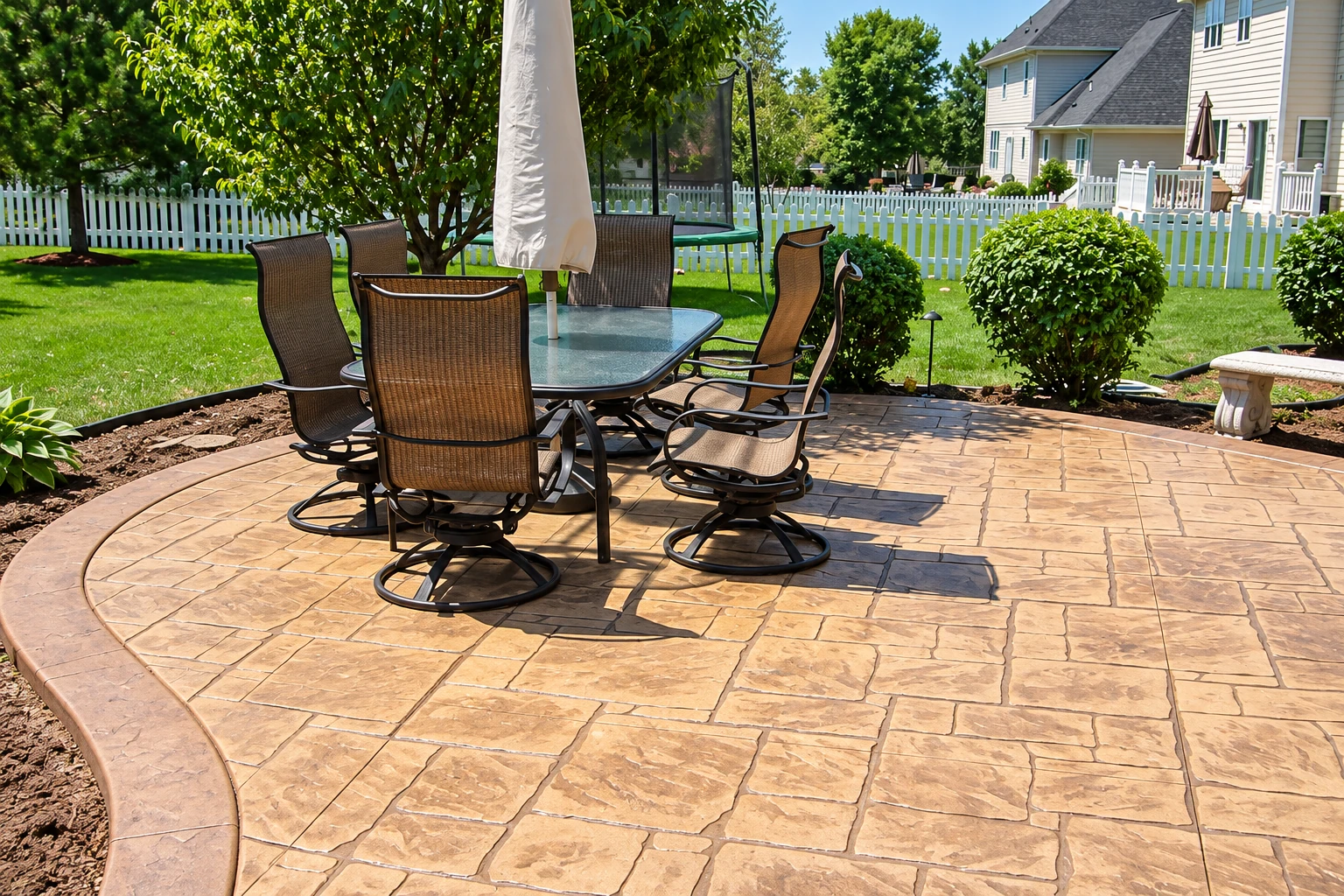
Stamped concrete is poured concrete that's colored, pressed with rubber mats while it's still soft, then sealed, so a patio, walkway or driveway in Carlsbad ends up looking like stone, brick, wood or tile.
The price turns on the size of the area, how much old concrete has to come out, how much base work the slab needs for the way you'll use it, and the pattern and color method you pick. The schedule depends on that same tear-out and base work, plus a permit if the job needs one. I come out, look at the spot and put my estimate in writing, so you see what you're paying for before we start.
California's state licensing board requires a license for work like this when the project needs a building permit, uses employees or comes to $1,000 or more, and its concrete class covers flat work like patios and driveways. We're licensed and insured.
I come out to look at the job and write the estimate. Then I run the work on site with our own crew, so the person who made the plan is there when it happens.
I'd rather spend an extra hour walking you through pattern, color and base than rush a pour, because concrete is hard to undo once it's down.
We back the work with a simple promise, satisfaction guaranteed, and the written estimate spells out the pattern, color method and sealing, so you know exactly what you're holding us to.
The pattern is the part you see, but the slab under it decides whether it lasts. We dig out and pack the subgrade, which is the ground the slab sits on. We check which way water runs so the slab falls away from the house, and we pour it as thick as its use calls for, with rebar, the steel that holds the slab together, sized to the job. If the budget gets tight, I'd drop a color or pick a simpler pattern before I'd skimp on the base, because a nice stamp on a slab that settles just cracks along with the dirt.
There are two ways to color stamped concrete, and I'll walk you through both. Integral color is mixed through the whole load, so a chip shows the same color, though the tones come out softer. Color hardener is spread over the fresh surface, which gives a richer color and a harder top, but a deep gouge shows gray and an uneven spread looks blotchy. On a driveway I'd usually pick hardener for that harder surface under tires. On a patio I lean toward integral, because a dropped planter won't leave a gray spot.
Control joints are the cut lines that give a slab a planned place to crack as it shrinks, and we tuck them into the grout lines of your pattern so they blend in. We seal in thin coats, because a heavy coat can bubble, turn white and go slick when it's wet. Stamped work often sits next to plain concrete, so we can run a stamped border along a new concrete sidewalk with a broom finish, a light brushed texture that gives shoes grip, or bring a stamped driveway up to garage floor concrete at the same level.
A patio is where stamped concrete pays off most, because you sit on it and look at it every day. Stone and tile patterns read well here and can tie the slab to the house.
A driveway needs the solid base and harder surface we covered above. A simpler pattern with fewer deep lines is also easier to keep clean when tires and oil drips are part of the picture.
A stamped walk is the first thing visitors see, and it's a small area, so it's a good way to try a pattern without stamping your whole yard.
A stamped band around a broom-finished slab puts the pattern and color only where the eye lands. On bigger patios it's a common middle ground between a plain slab and stamping all of it.
Send the form and we'll reply within one business day to set a time. I'll come out, look at the spot and write up a free estimate, with no obligation to go ahead.
A rough length and width is enough to start, because size moves the price more than anything else and helps me plan the visit.
Cars, foot traffic, a grill or a pool nearby all change the base, the color method and the sealer I'd suggest, so a line about daily use helps.
A saved photo of stone, brick or wood you like gives us a starting point, and I'll tell you how it would look on the shape of your slab.
Examples of stone, brick, wood and tile patterns, color tones and borders, to help you decide what to talk through at your estimate.
Straight answers to what Carlsbad homeowners usually ask about stamped concrete before we come out to measure.
Stamped concrete usually runs about $32 to $39 per square foot in the San Diego area, which is the closest figure we have for Carlsbad. That's the area's going rate, not our price. Your number moves with the pattern, color method, base work and whether an old slab comes out, so I'll give you a written figure after I see the spot.
One trade guide says to reseal every 2 to 3 years. Plan for it as a regular cost of keeping the color and finish, the way you'd plan to repaint trim. Done in the thin coats we described above, it helps keep the surface from going cloudy or slick.
You should expect some fine cracks over time. Concrete industry guidance says most slabs keep some shrinkage cracking even when they're built well, but good reinforcement and joints keep large, visible cracks in check. That's why we size the steel to the job and set the joints in your pattern's lines, where cracks tend to stay out of sight.
Check your project with the city, because its permit list doesn't settle it. Carlsbad generally requires city building permits for new structures or changes to existing ones, and its list names decks or patios, not stamped concrete. About 37% of the city is in the coastal zone, which has its own development standards. If a permit's needed, we file it, book the inspections and keep you posted.
It does if any work happens or materials sit in the city's right-of-way. The city requires a right-of-way permit for that, and the right-of-way covers public streets, sidewalks and easements, so it often comes up on driveways that meet the street. Like any permit the job needs, we file it and keep you posted.
Call (442) 216-7701 or send the form, so I can check where water runs and where joints fall before you choose a pattern.