A deck around a new pool
The dirt around a new pool shell was dug out and filled back in, so I'll ask how it was packed before we pour, because loose fill settles and cracks the deck above it.
Old deck slick when wet, hot on bare feet or holding puddles? We pour a new one with a finish that grips and slopes that drain.
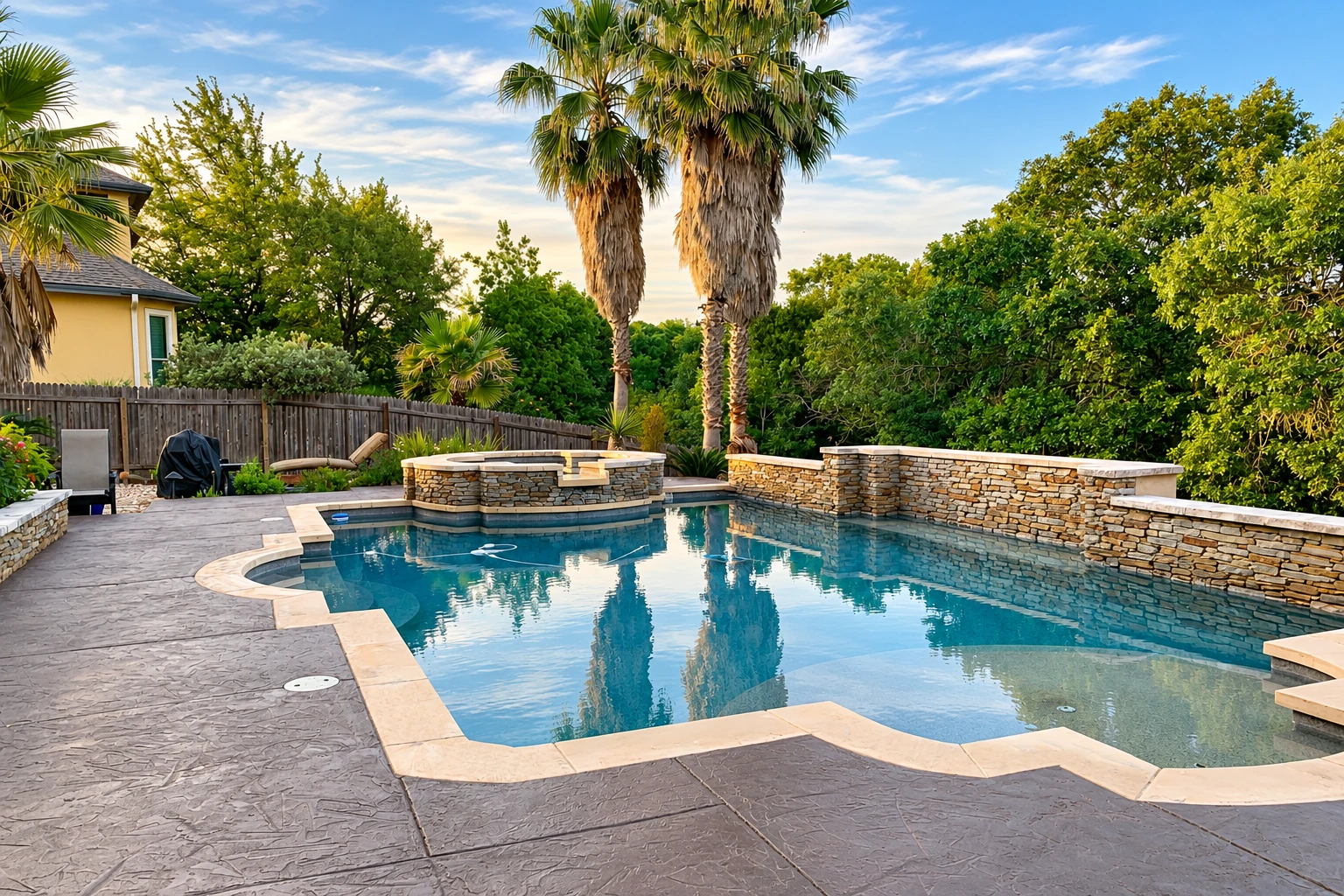
A concrete pool deck in Carlsbad is the slab around your pool, and because it'll be wet and walked on barefoot, we plan the finish for grip and heat and the slopes for drainage before anything else.
Most calls start with a deck that's cracked, sunk at one corner, holding puddles or too hot to cross barefoot by midafternoon. We're based in Carlsbad and see the same problems here and in the cities around it, and they usually trace back to a base that wasn't packed, slopes nobody checked or a finish picked only for looks.
The price moves with the size of the deck, whether old concrete has to be broken out and hauled away, the finish you pick, how much drain and slope work the yard needs and how easy it is to get into the backyard. The schedule turns on whether the job needs a permit, the weather and curing, the wait while fresh concrete hardens enough to take foot traffic. I'll put your price in writing after I walk the yard.
I come out myself, look at the pool, the yard and where the water goes, and write the estimate, so the person explaining the job is the one who runs it.
Our own crew does the work and I run it on site, so the slopes and joints we talked through at the estimate are the ones that end up in your deck.
Concrete is hard to undo, so I'd rather spend an extra hour on the layout and drainage than rush a pour, and I'll explain each line on the estimate.
On a pool deck we think about bare feet first. We pick a finish with enough grip for wet soles that won't turn into a griddle in the afternoon sun, and we set the slopes so water runs away from the house and off the deck instead of back into the pool, carrying dirt and leaves with it. Before the layout is final, I'll show you where the water goes.
Under all of that is the subgrade, the dirt the slab sits on, and that's where we spend the time. We dig it out and pack it hard, because a base that's only raked level settles with the dirt and takes the deck down with it. It's the same work we put into a slab foundation, and it's the part nobody sees on day one. When a budget gets tight, people want to cut the base and keep the nicer finish. I'd go the other way, since a good finish on a bad base cracks anyway and can't be fixed without tearing it out.
We cut control joints, shallow grooves that give the slab a place to crack in a straight line instead of across the middle, and we cut them on time, because late joints are how you get cracks where nobody chose. We pour early in the day so midday heat doesn't dry the top too fast and leave it weak and dusty later. If the deck steps down to the lawn or up to a door, we build concrete steps to match so the finish and the rise stay the same.
The dirt around a new pool shell was dug out and filled back in, so I'll ask how it was packed before we pour, because loose fill settles and cracks the deck above it.
We break out the old slab, find out why it moved and fix that first, because a new deck poured over the same soft spot or bad drainage ends up the same way.
If the slab is solid and just looks worn, an overlay, a thin new top layer, can give it a fresh finish, but only once whatever made it move or settle is repaired.
Adding a strip for chairs or a table means matching the new concrete to the old height and slope, so water still runs off the right way across both pieces.
Send the form and we'll reply within one business day to set a time. I'll come out, look at the pool and the yard, and write you a free estimate with no obligation.
A rough square footage, even one you paced off, helps me plan the visit and talk through finishes on the phone, since size is a big part of the price.
A new pool usually means fresh fill around the shell, and an older one may have coping or drains we work around, so the age tells me what to look at first.
The address lets me check backyard access and any permit questions before I come out, so the visit goes to your deck instead of paperwork.
Example photos of broom, textured and exposed aggregate finishes, along with deck, step and patio layouts, to help you point at what you like.
Straight answers to what homeowners ask before a pool deck pour, from cost and cracking to finishes, permits and licenses.
A 4-inch concrete slab, installed, usually runs about $11 to $16 per square foot in San Diego County, so treat that as a starting point. A pool deck can land somewhere else depending on the finish, the drain and slope work and any old concrete we haul off. I'll give you a written price for your deck after I see it.
It can, because all concrete tends to crack and a completely crack-free deck isn't possible, so be careful with anyone who promises zero cracks. The goal is cracks that stay small. Wire mesh or rebar, the steel set inside a slab, won't stop cracking, but placed in the right spot it can keep cracks narrower.
Look for a textured finish that isn't very dark, since very dark finishes can get uncomfortable in full sun. Broom, textured, exposed aggregate, coatings and overlays all grip and heat up differently, so pick for grip and heat first and looks second. A broom finish, fine lines dragged across the wet concrete, gives wet feet something to hold.
Usually, yes. The city generally requires a building permit when you add or physically change a structure, and decks and patios are on its sample list. About 37% of Carlsbad sits in the coastal zone, which has its own standards and permits. When your deck needs a permit, we file it and book the inspections, and the city's Building office takes permit calls at 442-339-2719.
Almost always. The state licensing board requires a license when a project needs a building permit, uses any additional workers or totals $1,000 or more in labor and materials, and a pool deck usually meets at least one of those. We're licensed and insured, and it's fair to ask any contractor you're comparing for their license before you sign.
Concrete is hard to undo, so call (442) 216-7701 or use the form and we'll settle the finish and slopes before the first truck shows up.