Back patios and seating areas
A patio takes feet and furniture rather than tires, so integral color usually fits. A dragged chair or a dropped pot then shows the same color instead of a gray spot.
Tired of a plain gray patio or a stamped slab with pale scrapes? We match the color and finish to how the space gets used.
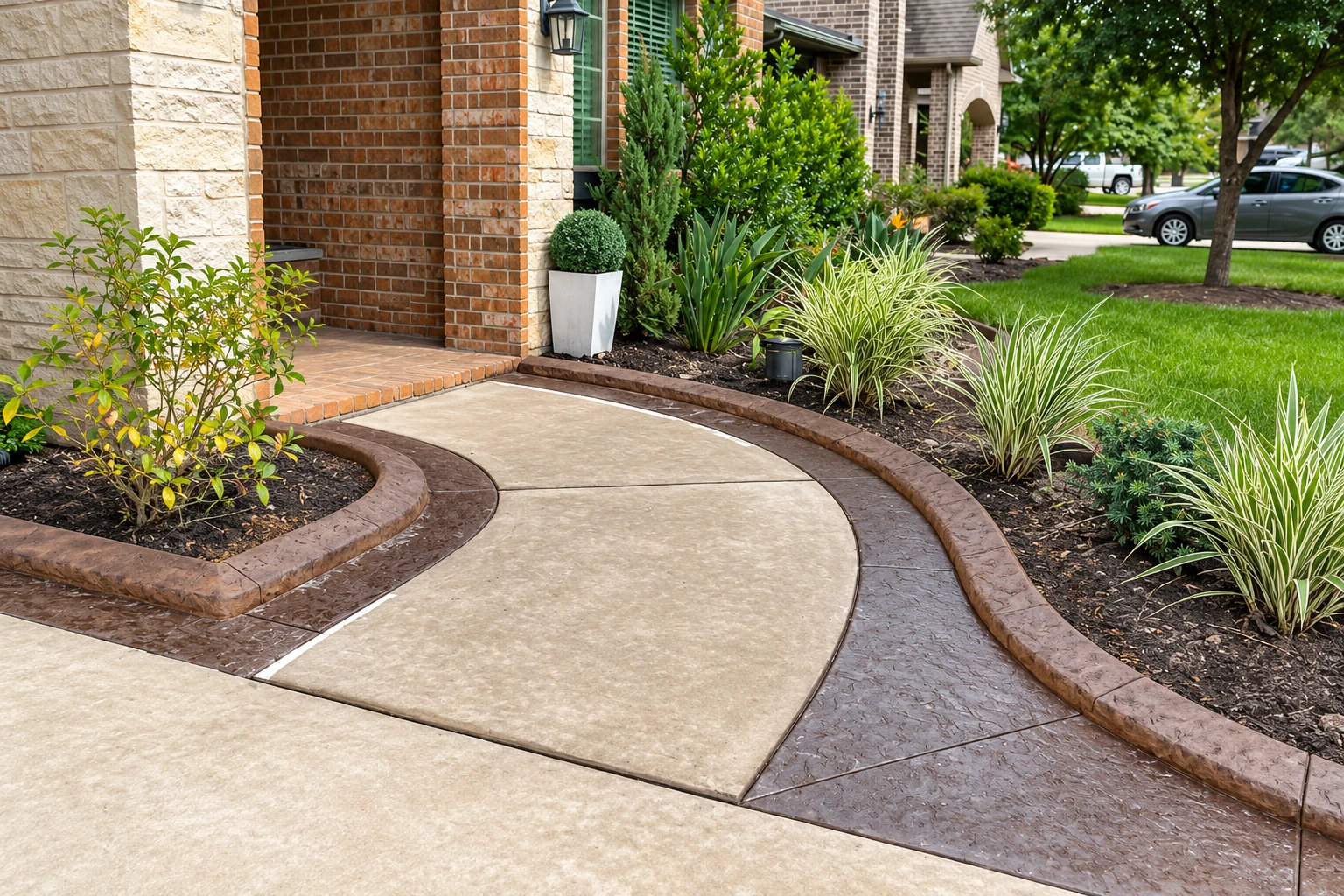
Decorative concrete in Carlsbad usually means stamped concrete. We pour the slab, color it, press it with rubber mats while it's still soft and then seal it, so your patio, walk or driveway looks like stone, brick, wood or tile but still works like concrete.
The price moves with the size of the area, the pattern and color method you pick, how much old concrete and dirt has to come out and how much base work the ground needs. The schedule turns mostly on the weather, whether the job needs a permit and city inspections, and what we find once the old slab is up. When I come out, I'll walk the area with you and put your number in writing.
Some clay soils around San Diego can swell a lot. That's true of the region as a whole, so I won't know about your lot until I've looked at the dirt on the visit. In California, a contractor needs a license from the state licensing board to build or change a structure when the job needs a building permit, uses any extra workers or runs $1,000 or more in labor and materials. We're licensed and insured.
I come out myself, look at the area and write the estimate, so you know what each part of the job is for before you pay for any of it.
Our own crew pours your slab and I run the job on site, so the person who planned the color and pattern with you is there when it goes down.
When your job needs a permit, we file it, book the city inspections and keep you posted, so you aren't left sorting out paperwork while you wait for the pour.
The first thing I ask is how you'll use the area, because that decides the color method. Integral color is pigment mixed through the whole slab, so a chip or a later saw cut shows the same color as the top. The slab ages without pale scars, which makes integral color the easy, forgiving pick for most patios and walks. Color hardener is worked into the top layer and gives a harder skin, so it's the common choice for driveways and anything that takes traffic. The catch is that the color lives near the surface, and a deep gouge shows gray underneath. I'll lay out both for your spot and tell you which one I'd pick.
The base is the part I won't cut back on, even though you'll never see it. When the budget's tight, people want to trim there and keep the fancy pattern, but a good-looking pattern on a slab that settles is still a slab that settles. We dig out and pack the subgrade, which is the dirt and rock the slab sits on. We check where the water runs so the slab slopes away from your house, and we pour early in the day so the midday heat doesn't leave a weak, dusty top.
Decorative work often sits next to other concrete. If your patio is on a slope and needs a wall to hold the ground back, that's concrete retaining walls, and we plan the two together so water moves off the slab and away from the wall. If you're after a concrete floor inside the house, that starts with concrete floor installation.
A patio takes feet and furniture rather than tires, so integral color usually fits. A dragged chair or a dropped pot then shows the same color instead of a gray spot.
Turning tires wear at the surface, which is why the tougher skin of color hardener is the usual pick here. We'll talk through what a deep gouge would look like before you choose.
An entry is what people see first, so we lay the pattern square to the house and steps. We also pick a color method that won't leave pale marks where shoes and wheels scuff it.
Around water, the sealer matters as much as the stamp. A heavy flood coat can bubble, turn white and get slick when wet, so sealer should go on in two thin, even coats.
Send the form and we'll reply within one business day to set up a visit. I'll come look at the area and put your estimate in writing. It's free, and there's no obligation.
A paced-off length and width is plenty, because it tells me whether we're talking about a small entry or a whole backyard before I come out.
Tell us whether it's a patio, a walk or a spot you'll drive on, since that steers the color method and the patterns we'll talk about.
A few phone photos of any old concrete, its cracks and where water pools show me what has to come out before I'm standing there with you.
Look through slate, brick, wood plank and tile patterns along with color choices, and bring the ones you like to the estimate visit.
Straight answers to what Carlsbad homeowners ask most about stamped concrete, from price and cracks to sealing and permits.
Stamped concrete in the San Diego area usually costs about $32 to $39 per square foot. That's the going rate across the region, not our price. Where your job lands depends on the size, the pattern, the color method and how much base work the ground needs, and I'll put your number in writing after I've seen the area.
It can. All concrete tends to crack, and no one can pour a slab that's completely crack free. What we can do is decide where it cracks, using control joints. Those are cut lines that give the slab a planned place to crack, spaced the same as on any slab and tucked into the pattern lines. I'll show you that layout before we pour.
Reseal when the surface shows it needs it, not after a set number of years. Resealing is the most common upkeep stamped concrete needs. The signs are water and stains no longer beading up and the color losing its depth. Keep an eye on the spots that get walked on most, since they usually show it first.
You may. The City of Carlsbad says building permits are generally required when you add new structures or physically change existing ones, and its sample list includes decks or patios. The city also says some work needs no permit, though that work still has to meet building and city codes. If yours needs one, that paperwork is ours.
Sometimes, with a decorative overlay, which is a cement-based mix spread over existing concrete to give it a new surface. An overlay sits on whatever is already there, so I can only tell whether your slab is a good candidate once I'm on site. A slab that's sinking or badly cracked usually needs to come out first.
Concrete is hard to undo once it sets, so call (442) 216-7701 or use the form and we'll plan yours before anything gets mixed.