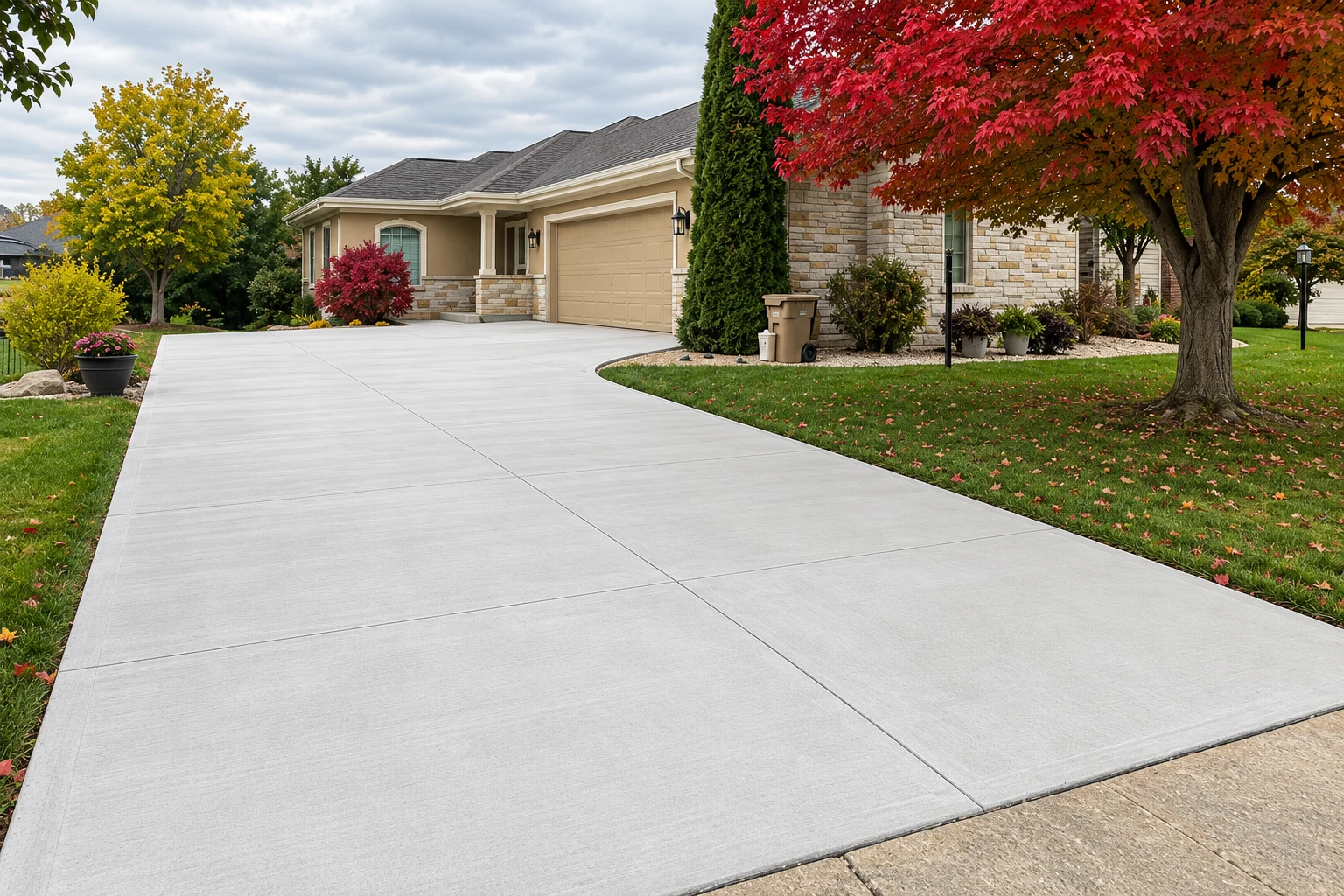
Concrete driveway building
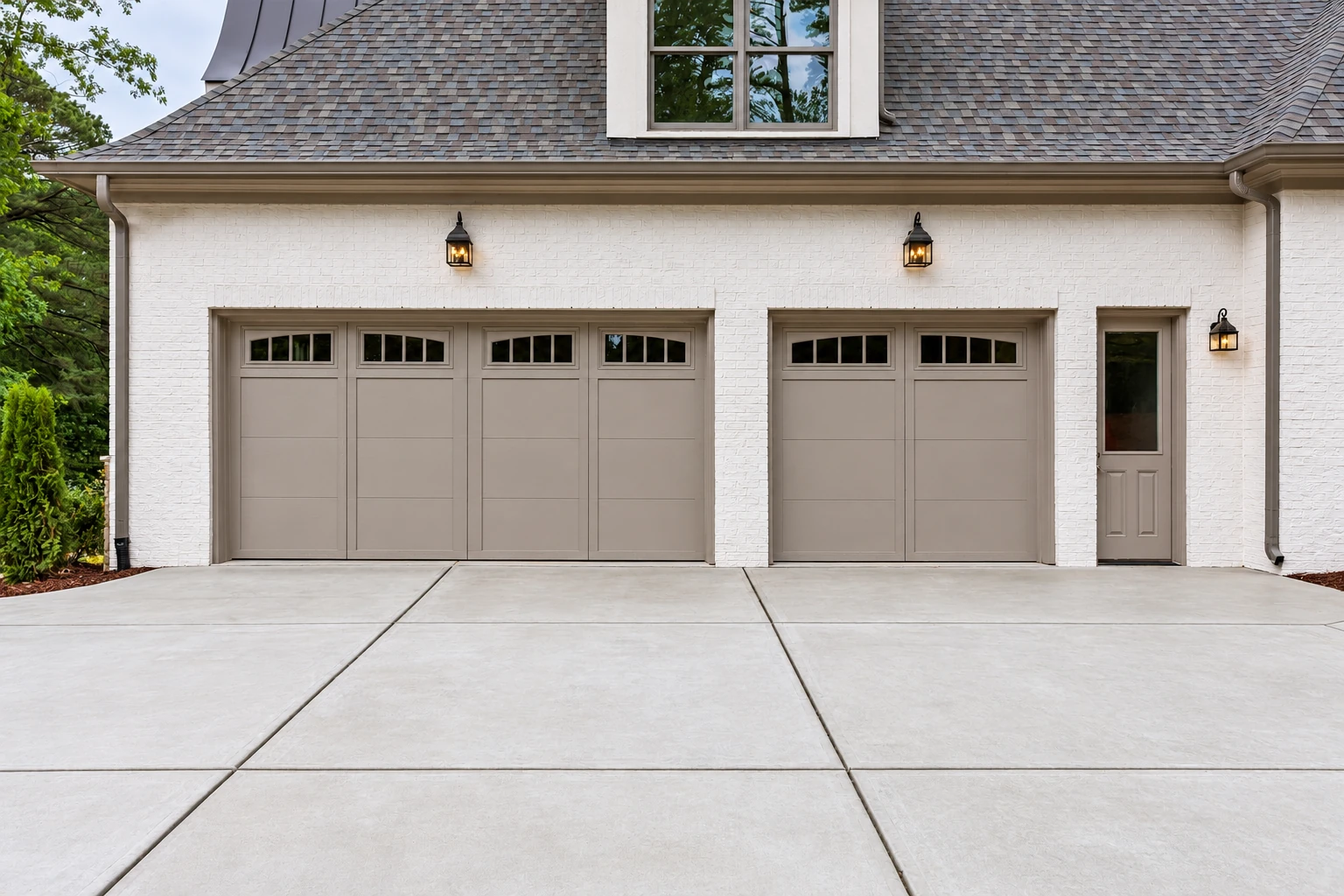
For a driveway that's sunk or cracked across, we break out the old slab, rebuild the base, add rebar, the steel that holds cracks tight, and pour new concrete.
Premier Carlsbad Concrete pours driveways, patios, walls, steps and foundations for homes in El Cajon, CA. I come out to look at the job myself, and our own crew digs, packs, pours and finishes it.
The calls we get from El Cajon usually start with something you can see: a driveway that's sunk where it meets the garage, a patio holding water against the back wall, front steps pulling away from the porch. Many of these slabs have been down a long time, and the trouble usually traces back to what's under them. We're based in Carlsbad and do the same work in La Mesa and Santee next door.
The price turns on how big the slab is, whether old concrete has to come out first, how much base work the ground needs, how easily our crew can reach the spot and which finish you pick. The schedule turns on curing, the days fresh concrete needs to harden before you walk or park on it, on permits and inspections when a job needs them, and on the weather, since on hot days we'd rather pour early than let the top dry weak and dusty. I put all of that in writing after I've walked the site with you, so you know what you're paying for before we start.
Here, the first thing I sort out is whose rules your job falls under, and the questions below cover the city limits, the permit offices and the licenses that apply.
We dig out and pack the subgrade, the ground the slab sits on, because concrete only stays flat if the dirt under it does. If money's tight, I'd cut the finish before the base.
Before forms go up, we check where rain runs off your roof and yard, then set the slab to fall away from the walls, so water doesn't pool against your foundation.
Control joints are grooves we cut so that when a slab cracks, it cracks along a line we picked. We cut them on time, because waiting lets the concrete choose for us.
For a driveway that's sunk or cracked across, we break out the old slab, rebuild the base, add rebar, the steel that holds cracks tight, and pour new concrete.
Older patios often hold water against the house after rain, so we set the new slab to drain toward the yard and finish it for the way you'll use it.
Stamped concrete gives a patio or walkway the look of stone or brick, and we still build the base the same way underneath, because the pattern won't hide a slab that settles.
We replace cracked and lifted walkways from the driveway to the front door or along the side yard, with a broom finish, a light texture that keeps wet feet from slipping.
When a garage floor has cracked, heaved or settled at the door, we remove it, rebuild the base and pour a new slab sloped so water from a wet car drains out.
Colored, textured and exposed-aggregate finishes, where the small stones in the mix show at the surface, can dress up an entry or backyard, and I'll explain how each one wears.
On sloped lots, a concrete retaining wall holds back the yard so you get flat ground to use, and we plan drainage behind it, because trapped water pushes walls out.
We pour interior slabs for additions, workshops and converted spaces, and set the finish to match what goes on top, whether that's tile, flooring or bare sealed concrete.
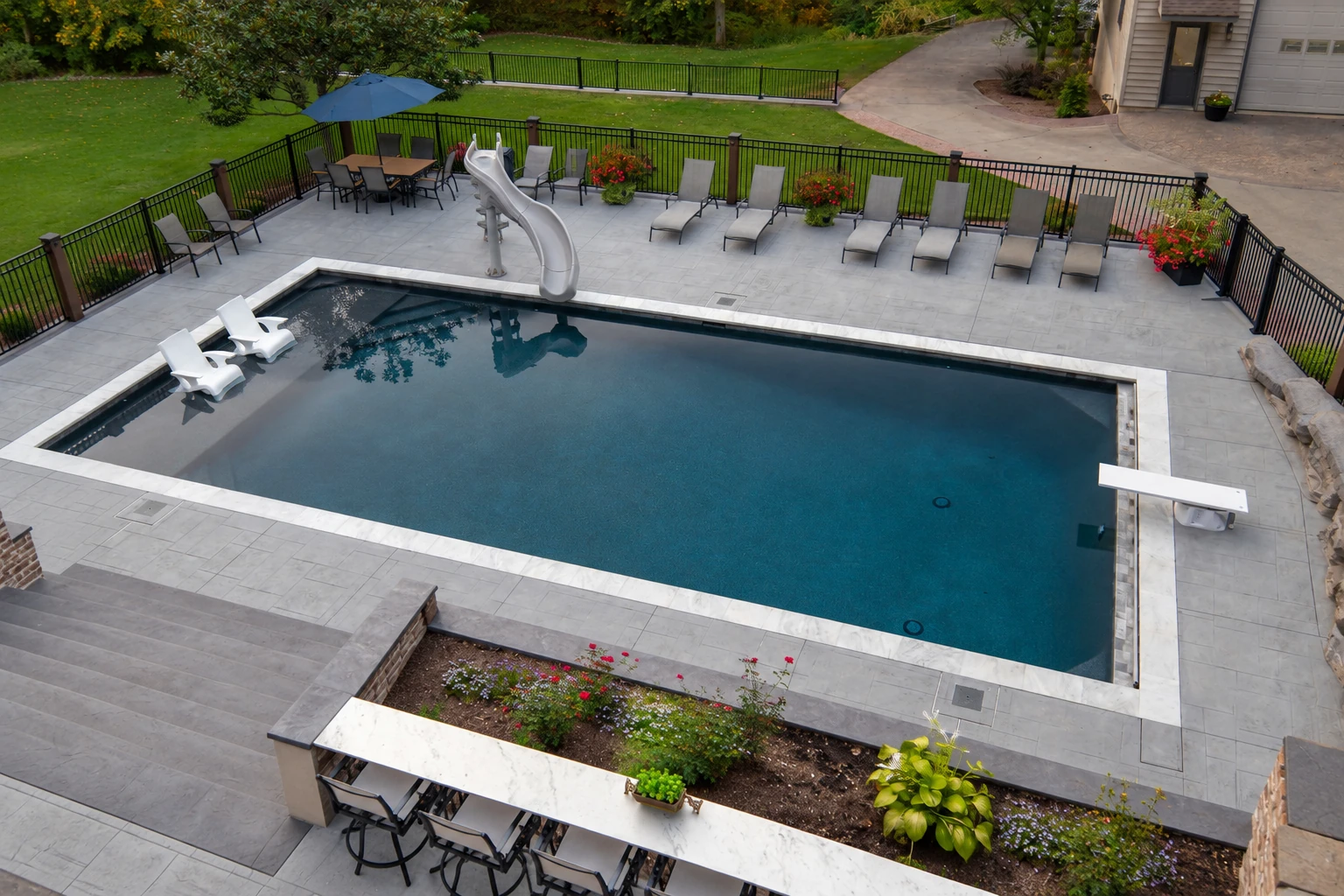
Around a pool we use a finish with enough grip for wet feet and slope the deck away from the water, so rain and splash-out don't wash dirt back in.
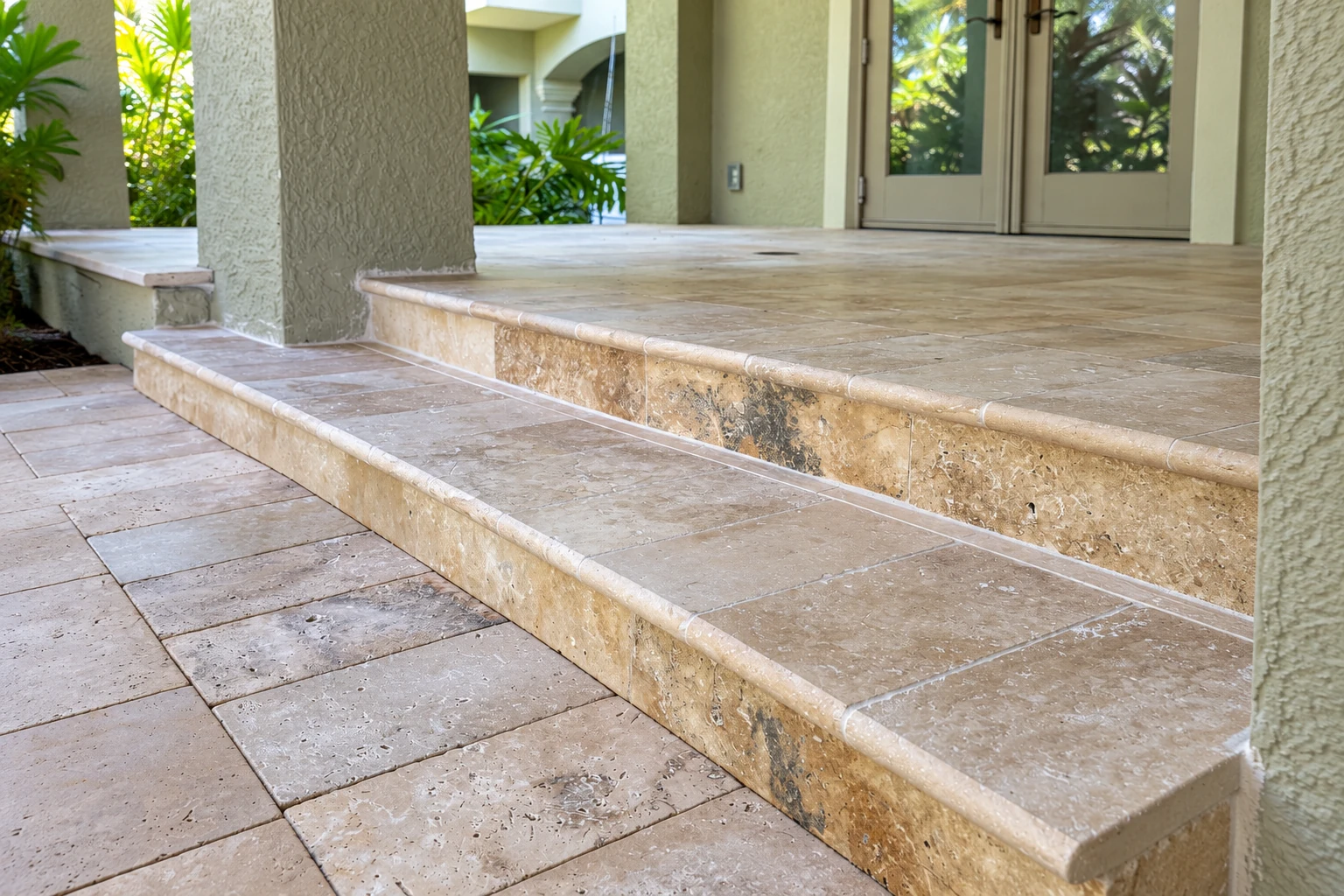
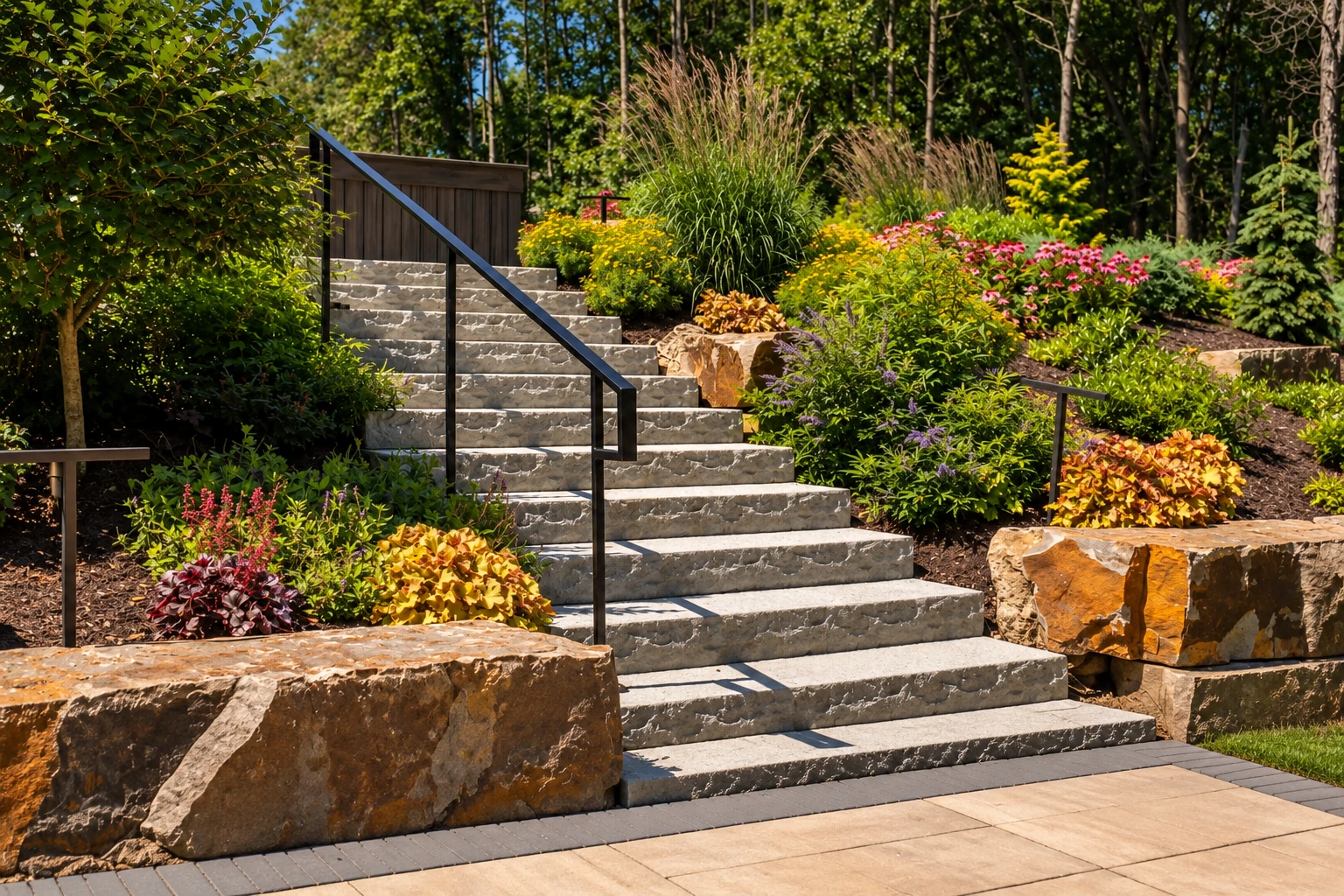
Front steps that have pulled away from the porch or rock underfoot get broken out and rebuilt with steel tying them in, with each step the same height.
For a new garage, addition or accessory unit on a slab, we form, place steel and pour the foundation to the plans, and work around the inspections the job calls for.
For a structure that needs footings and walls under it, not a slab alone, we dig, set the steel and pour to the drawings, because a foundation is the hardest thing to redo.
For apartment, church and small business lots, we plan the pour around how cars and delivery trucks move and where the water goes, so the lot drains instead of puddling.
Footings carry posts, walls, patio covers and additions, so we dig them to the depth and width on the plans and keep the bottoms clean before the concrete goes in.
When part of a slab or foundation has dropped, I look at why before we lift anything, because raising it without fixing the cause usually means it settles again.
We saw-cut concrete for new doorways, plumbing trenches and partial driveway replacements, which gives a straight, clean edge to pour against instead of a jackhammered one.
Send the address and what you're planning, and we'll reply within one business day to set a time. I come out, look at the site with you and write a free estimate, with no obligation.
The person who looks at your driveway is the person who prices it and runs the pour, so what we talk about at the curb is what the crew builds.
The estimate spells out the base work, slab thickness, steel and finish, so you can see what you're paying for and compare it line by line with anyone else's.
We don't hand the job to another outfit. Our own crew digs, pours and finishes it, and I'm on site running it, so questions get answered on the spot.
These are the questions El Cajon homeowners ask about permits, licenses and whether new concrete will crack, answered the way I'd answer them on site.
It might not be, even if your mail says El Cajon, because many unincorporated San Diego County addresses list El Cajon as the city. If your address doesn't come up in the city's online permit portal, it's likely outside the city limits, and that changes whose rules apply. I check this before I write the estimate.
Building Safety handles building permits for the city. Work that reaches into the public right-of-way, like the sidewalk out front, goes through Engineering Services for an encroachment permit, and Engineering Services also processes grading plans for grading on private property. When a job needs a permit, we file it, book the city inspections and keep you posted on each step.
A contractor needs a state license to build or alter a structure when the job needs a building permit, uses any extra workers, or costs $1,000 or more in labor and materials, counting every contract for it. That's the rule from the Contractors State License Board. A smaller job with no permit and no employees can be exempt. We're licensed and insured.
Yes. The city requires every business working inside its limits to hold an El Cajon business license and pay the business license tax, and that includes companies from outside the city that do work at a customer's home. It's a fair thing to ask any contractor you're weighing before work starts.
It can still crack, since concrete shrinks as it cures, but a new slab usually holds up better when the old one failed from a raked base or bad drainage. The base, slope and joints I covered above are where that's decided, and rebar keeps any crack that does show up tight. When I look at your old driveway, I'll show you why it cracked.
Besides El Cajon, these are the cities with their own page on our site. If your city isn't listed, call or send the address and I'll tell you whether we can take the job.
Call (442) 216-7701 or send the form, because concrete is hard to undo, and an hour spent planning your job beats fixing a rushed pour.